
While the reforms made to Michigan’s system of indigent defense have focused on the county-based trial level, that is just one of three tiers to the system. All three play unique, critical roles, as Michigan Law alumni explain.


Blase Schmid Kearney, ’11, reflects on trial court public defense
Blase Schmid Kearney, ’11, “more or less grew up in a public defender office” in rural northern Michigan, where his mother worked as a secretary. Now a clinical professor at the University of Texas School of Law, Kearney initially worked for seven years at the Public Defender Service in Washington, DC, before returning to Michigan and the Neighborhood Defender Service in Detroit.
“All of our politicians and government officials take oaths to defend the Constitution. Public defenders are the ones who actually do it,” Kearney says. “They’re the ones who are in court every day defending the Constitution, fighting for freedom of people, and pushing to make sure that the ideals that the country was founded on are actually respected in court.”
As a public defender, Kearney says that fewer than 5 percent of his cases ever got to the trial stage. He spent roughly half of his workday time in court, “talking to clients and trying to negotiate with prosecutors, having myriad off-the-record conversations with clerks and witnesses and judges and family members. And waiting for my case to be called.”
The rest would be office time—meeting with supervisors, workshopping ideas with colleagues. He’d then typically do motion writing and prep work in the evenings.
“Trial-level state work is very much like putting fires out all the time,” Kearney says. “The nature of the cases tends to be what you think of when you picture what a criminal defense attorney does.
“The timelines are very accelerated compared to federal trial work. And because the federal system has a much more punitive sentencing scheme than almost every state system, you find yourself actually going to trial a little bit more frequently.”
Kearney continues, “I think that being a public defender is the best thing you can do with a law degree.” Federal defender work and state appellate work, he says, are much more like each other than either of them is like state-level trial work. “If you are somebody who likes something brand new and exciting happening day to day that might stress other people out, then a state-level public defender is what you should be aiming for.”
Inside the State Appellate Defender Office with Emma Lawton, ’15
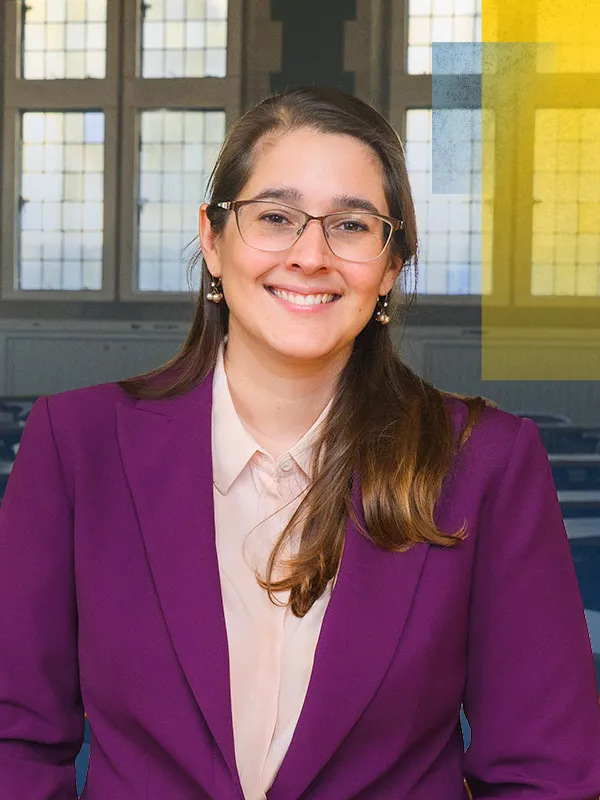
Emma Lawton, ’15, did trial work before moving to her current role with Michigan’s State Appellate Defender Office (SADO) in 2022. Her interest in public defense dates back to work with the Michigan Innocence Clinic during her 1L summer.
Lawton believes full-time public defender offices are critical for a functioning legal system. “You can brainstorm and track patterns and identify issues that really need to be worked on in a particular community,” she says. “You are better equipped to implement that systemic change. It elevates the defense practice in that community.”
At SADO, she typically has two types of days: either working on cases—reading briefs, writing to clients, conducting video visits, doing research—or appearing in court. “I have days where I feel like I’m a trial attorney; I’m back in trial court, arguing a motion or having an evidentiary hearing,” she says. “Then there’s traditional appellate court stuff, conducting oral argument.”
Lawton says the pace of appellate work is quite different from trial work. “Trial court was very active; you’re always juggling a lot of balls all at once. Most of my clients were usually not in custody, so I might be trying to help them find housing or getting to know their families,” she says.
“Now, on the appeals side, the activity has slowed down. My clients are mostly in custody. You tend to get to know more of the person. It feels a little bit more like a partnership. It’s a much slower, longer development of a relationship.”
She also noted that trial work has the potential for more small wins along the way, while appellate work has a longer horizon: “There are these long stretches where there’s nothing at all. You have to count on the occasional really big win to sustain you through everything else.”

Brandy Robinson, ’03, on leading the Federal Community Defender office
Inspired by visiting professor James Forman’s work with the Public Defender Service in Washington, DC, Brandy Robinson, ’03, interned for the organization and “was blown away at the level of excellence and passion.” Now, she carries that energy forward leading the Federal Community Defender office in Detroit, which she first joined in 2012. Her office represents indigent defendants in US District Court, the US Court of Appeals, and the Supreme Court.
“America’s constitutional promises are lofty and noble, and they represent the best of who we aspire to be,” Robinson says. “It is a frightening experience to be charged with a crime by the United States of America. To make sure the government’s enormous power doesn’t crush its people, we must equip appointed counsel with strong training and resources. It’s really about making sure that our nation stays true to its core principles.”
Robinson’s workdays might include meeting with clients, reviewing discovery, doing research, consulting with colleagues, and considering potential conflicts of interest in the office’s cases—as well as administrative work like payroll and discussing bigger issues in the system.
Robinson helped establish the Neighborhood Defender Service in Detroit, and she says state cases tend to be faster paced than federal. “In the federal system, you might have fewer cases, but they are far more complex,” she says.
Procedures can be quite different. For example, instead of a preliminary examination in open court, the federal system uses a closed grand jury indictment process, she adds. In addition, rules for what the government has to disclose are more limited at the federal level, and penalties for similar offenses are much harsher.
“It’s wonderful work,” Robinson says. “It can be heavy, it can be challenging, but because the need is so great, it’s also very rewarding. I’m happy to see my alma mater supporting students who are dedicated to this area of the law. Their work will make a difference and is worth the investment.”