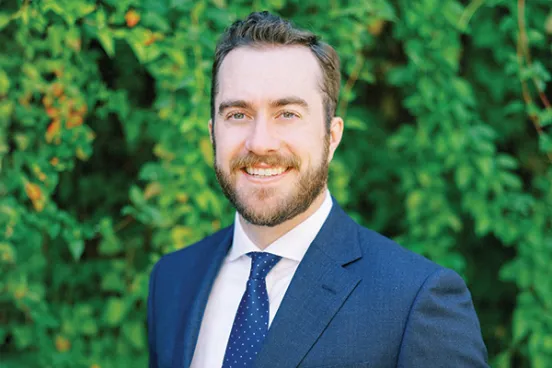
Immigrant doctors are vital to the US health care system. Christopher Wendt, ’98, points out that 23 percent of physicians in the United States were trained in other countries, according to the American Medical Association (AMA).

For large institutions, managing immigration issues for current and prospective employees can be complicated. “Trying to recruit the best and the brightest, and the most talented, from all over the world triggers a lot of paperwork,” says Wendt, who retired from Mayo Clinic recently after nearly 23 years as immigration counsel.
Navigating immigration issues can be difficult for any business. But in medicine, if employers have trouble hiring physicians and other providers trained in other countries, there’s a lot at stake. The United States faces a doctor shortage—a shortfall of up to 86,000 physicians by 2036, according to the Association of American Medical Colleges—and immigrant doctors are helping to fill it, Wendt says.
In certain areas of the United States, residents’ access to medical care hinges on immigrant doctors, Wendt says. “In farm country in southwestern Minnesota, those physicians play a really huge role in that infrastructure.” In 2021, 64 percent of foreign-trained doctors were practicing in underserved areas, per the AMA.
The complexities of the immigration process
In his work, Wendt focused on strategic direction in response to shifting regulations. “Anytime there’s a new rule or a policy change regarding immigration, it’s part of my job to figure out: How will this impact organizations broadly, how will this affect my client specifically, and how can we prepare?”
Changes in travel restrictions and temporary protected status for people from certain countries have posed challenges. Because temporary protected status was set to expire for some countries, Wendt has advised employees on what their options are, including whether an employer can sponsor them for a work visa so they can maintain legal status.
“For most highly skilled individuals, reasonably certain pathways remain open, but a lot now is dependent upon nationality” and other factors, Wendt says. “There’s a lot more moving parts than there used to be with regard to what you have to consider when you’re trying to assess: Is this physician someone that we can hire? And if so, can we get them on board by date X?”
Wendt recently joined the immigration law firm Fragomen as of counsel. “It was a very rewarding career at Mayo Clinic, and I really enjoyed working for the organization's mission,” he says. “This moment is a really fascinating time to be an immigration attorney and to have the opportunity to be an expert resource in the health care immigration space.”
Christopher Wendt, ’98Anytime there’s a new rule or a policy change regarding immigration, it’s part of my job to figure out: How will this impact organizations broadly, how will this affect my client specifically, and how can we prepare?
A new framework for legal aid in Minnesota
In July 2025, Wendt became the inaugural chair of the Minnesota State Board of Civil Legal Aid (BOCLA), a standalone agency with a robust mandate for grants and for establishing legal aid standards. “It’s a rare opportunity to get in on the ground floor of a new state agency,” he says.
When Wendt served on the board’s predecessor, the Legal Services Advisory Committee, he says, “I realized how much I love that systems work.” While handling individual cases is rewarding, it may not “address the systemic issues, and there’s a way to do a lot of good at that level as well,” he says. He values this systems work in immigration and at BOCLA.
In Minnesota in 2024, Wendt says, “Our legal aid organizations did about 66,000 intakes, and we were able to provide some level of service to only about 61 percent of those intakes. So there’s just a huge unmet need.” BOCLA aims to improve efficiency without losing sight of these cases’ highly personal elements, he says.
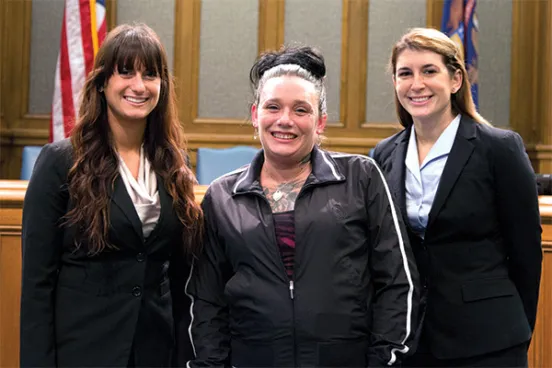
Wendt has been involved in pro bono work since law school. At Michigan Law, he participated in a clinic that worked on asylum cases, and he and a classmate represented an asylum seeker from Iran. “Leading this new agency feels like a capstone to a career supporting civil legal aid,” Wendt says.
All opinions expressed in the article are personal, and not that of any employer or agency.