
Summer 2026

Michigan Law students visit Growing Hope.

Cover Story

Michigan Law Clinics Evolve to Meet Changing Needs of Students and the Community

The 17 clinics at Michigan Law offer students practical experience while also providing clients with legal help they might not otherwise receive. At the same time, the strength of the program—and its willingness to change with the times—gives Michigan a competitive edge over its peer schools. Here, Law Quadrangle explores the program and its enduring significance for students and the clients they serve. 



Learning and Serving in Michigan Law’s Clinical Program

“As a public law school, we exist not only to educate students but to advance the public good. Our legal clinics are one of the most direct and powerful ways we fulfill that mission,” says Debra Chopp, associate dean for experiential education. 
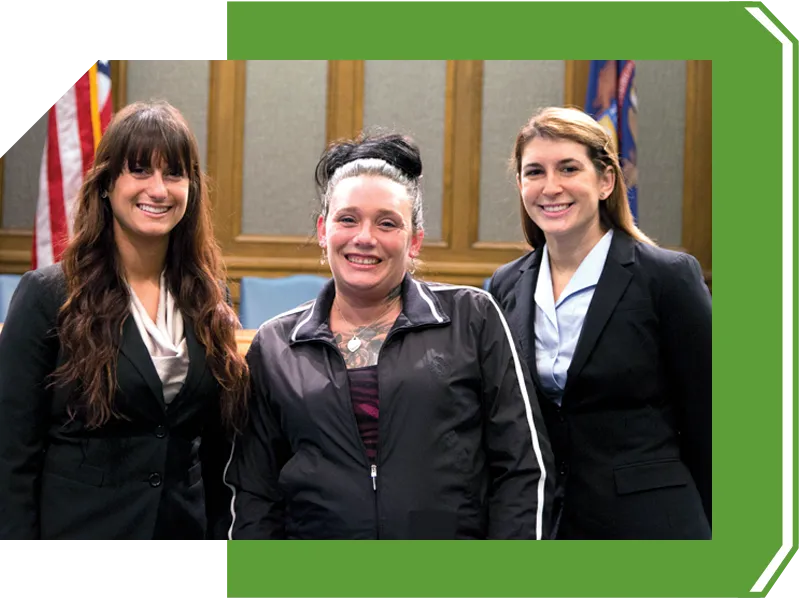
Read about the Clinical Program


The Lingering Influence of Clinical Work

The work of the Law School’s clinics can leave a profound, sometimes life-altering impact on its clients. It often does the same for the student-attorneys. Law Quadrangle recently caught up with a handful of alumni whose work with the clinics was featured in the magazine during their student days.
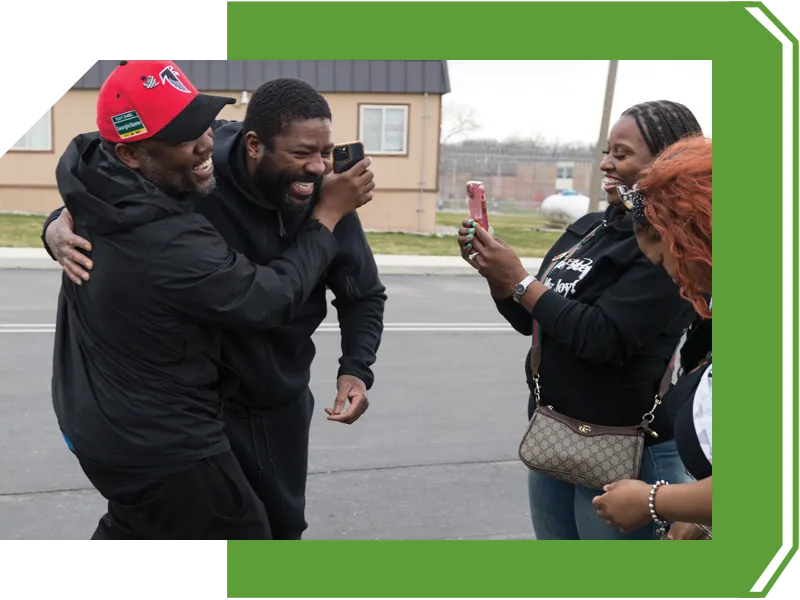
Read about the Impact of Our Clinics


Recent Wins from Michigan Law’s Clinical Program

Students and their faculty supervisors in the clinics regularly deliver results for their clients—in and out of the courtroom.

Read about the Recent Wins


Clinics Facts and Figures

For more than 45 years, Michigan Law has offered clinics in which students take “first-chair” lead responsibility for real clients with real legal needs. Students represent these clients under the supervision of experienced faculty in small, intensive settings in classrooms, boardrooms, and courtrooms in Michigan and beyond.

Learn More About the Clinics


Pro Bono Program Extends Experiential Opportunities

Particularly attractive to students who may not be quite ready to commit to an intensive, semester-long clinic experience, Michigan Law’s Pro Bono Program offers students a chance to do some meaningful work, develop marketable skills, and maybe begin a lifelong habit of volunteering.

Read about the Pro Bono Program


Cross-Campus Partnerships in the Immigrant Justice Lab

In a unique partnership, the Immigrant Justice Lab teams up Michigan Law students with undergraduates in the College of Literature, Science, and the Arts to help young immigrants seeking asylum.
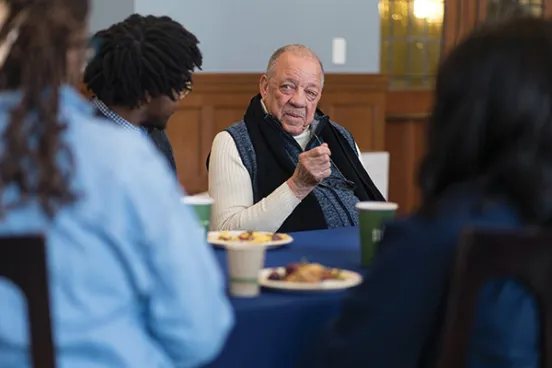
Read about the Immigrant Justice Lab


Student Advocates

Today, the American Bar Association requires all law students to complete at least six credit hours of experiential learning through clinics or other approved means. But when Michigan Law students and faculty first began advocating for credited work with local legal aid organizations, no such requirement existed. 

The faculty approved “Clinical Law” on an experimental basis in 1969, offering an eight-week summer course under the direction of Professor J.J. White, ’62, who described himself at the time as a “wholly partial and largely irrational advocate of clinical law.” Soon after, students began lobbying the administration for a permanent for-credit clinical program, sharing testimonials and mounting a public campaign in Res Gestae. In February 1970, William A. Irwin, ’70, reflected on his uncredited clinical experience. 

“An exposure to clinical law gives the student…something concrete to base a judgment upon. The experience of the course impressed upon me the centrality of procedure, the importance of negotiation and settlement, and the indispensability of complete candor and trust on the part of both attorney and client.” 

In fall 1970, the faculty unanimously approved a for-credit clinical program. More than 50 years later, the value students described still rings true. While the program has grown and evolved, its mission remains the same: to train outstanding lawyers while serving those in need.

3%

Percentage of students who participated in clinic activities in 1969, according to a contemporaneous article in Res Gestae


80%

Percentage of students who take a clinic at Michigan Law today*

*Figure varies slightly for each graduating class.


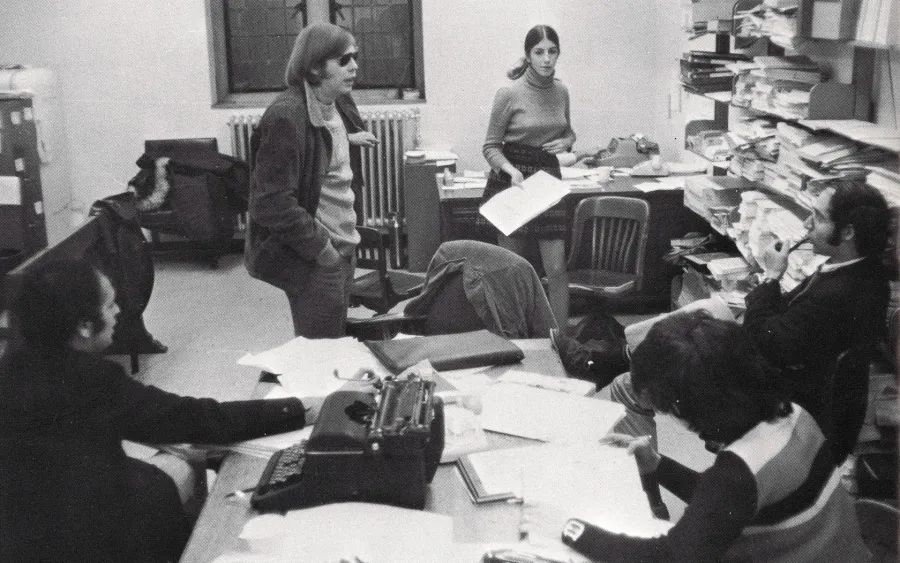
Michigan Law graduates in 1972
Michigan Law graduates in 1972 were among the first to receive credit for their work in the clinical program, including David Richheimer, Charles Silverman, Miriam (Bernstein) Steinberg, Thomas Brown, and Barbara Rom, pictured (left to right) in the 1972 Codicil yearbook.