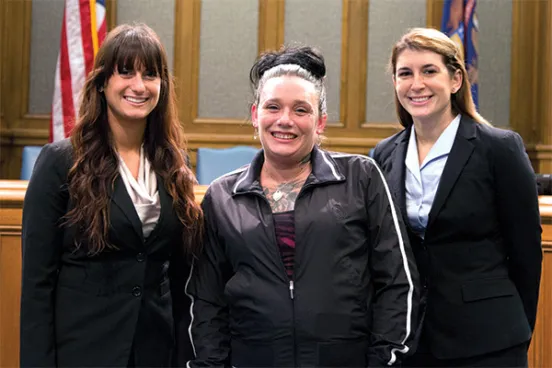
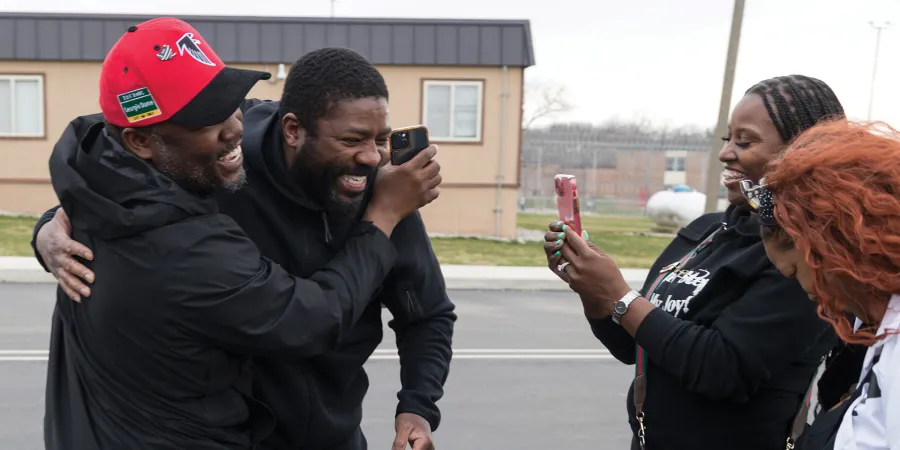
Two Men Win Freedom Many Years After Wrongful Convictions
In March, in two separate cases, the Michigan Innocence Clinic helped free two men who had been wrongfully convicted on murder charges in Detroit. In the first case, a judge vacated the conviction of and dismissed murder charges against George Calicut, providing him the relief he had been seeking for more than 27 years. Calicut had been convicted of murder based on a false confession coerced by a former Detroit police officer whose actions have resulted in a number of exonerations and judgments against the city. (Read more about this case.) That same officer and others also falsified witness statements in the case of Roy Blackman, who was released 27 years to the day after his wrongful conviction. He had been convicted entirely on false witness testimony with no physical evidence tying him to the case.
Detained Immigrants Get Bond Hearing
Reversing 30 years of practice, Immigration and Customs Enforcement decided in summer 2025 that all immigrants facing removal had to be detained—even if they posed no danger to the community or flight risk. In October, the Civil Rights Litigation Initiative filed a habeas corpus petition in federal court on behalf of four men who had been detained during traffic stops and were being held in a private detention facility. All four men had first come to the United States as minors, had strong ties in the community, had no criminal records, and had viable defenses to deportation. In November, a federal judge ruled that the four men were entitled to bond hearings in Immigration Court. Two of the four were granted bond.
Student-Attorneys Win Settlement Over Car, Conduct Jury Trial
A client of the Veterans Legal Clinic had taken his classic car to a local mechanic who failed to properly attach the fuel line, and the car exploded as the client was driving it home. Students negotiated a settlement that resulted in the client receiving $11,000, more than the value of the car. Meanwhile, around the same time, two student-attorneys in the clinic conducted a jury trial in a case involving a contract dispute between a veteran and a family member over the deed to a house. After a split decision in court, the clinic—led by a new team of student-attorneys—took the case to the Michigan Court of Appeals.
Youth Receives Needed Medical Device
Michigan Medicine had prescribed a “Cubby bed”—which combines features for safety, sensory regulation, and better sleep—for a 12-year-old boy who has severe autism, attention deficit hyperactivity disorder, and post-traumatic stress disorder. However, Medicaid would not cover the costs of the bed. Student-attorneys in the Pediatric Advocacy Clinic fought the decision in court, and last fall, a judge ordered Medicaid to cover the cost of the device.
Three Former Youth Offenders Get New Sentences
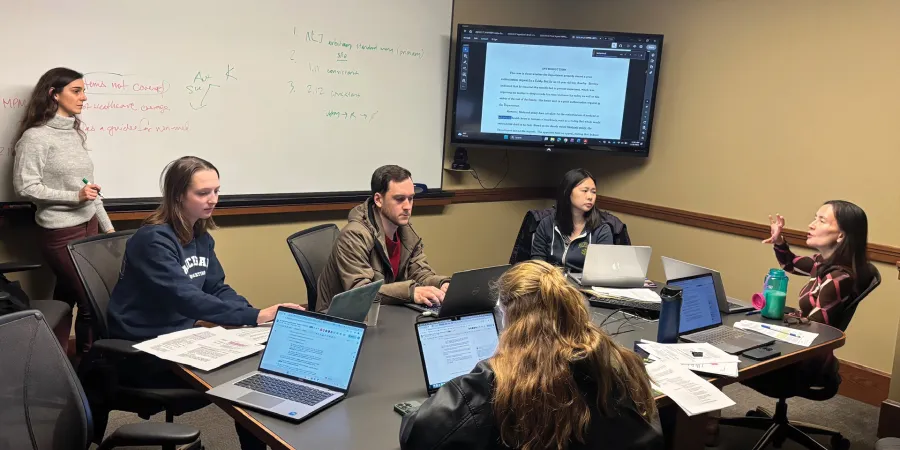
In 2025, the Juvenile Justice Clinic had three clients resentenced and released after 45 to 50 years in prison. One was 18 and two were 20 years old when they were arrested and convicted of murder, but all are now elderly. All were found to be remorseful and rehabilitated, and to pose no public safety risk.
Survivors Take a Stand on Trafficking
Students in the Human Trafficking and Immigration Clinic helped a group of survivors draft a submission to a European Union-level independent monitoring body. The document highlights the failure of nations to investigate human trafficking cases as human trafficking rather than acts of abuse by an individual actor.
Client Testifies Before Congress
One client of the Zell Entrepreneurship Clinic’s name, image, and likeness program spoke to Congress. The student-athlete discussed the need for regulation of NIL, specifically calling out the clinic's support as pivotal.