

Topic: Public Interest
95 results


Features Summer 2026
Learning and Serving in Michigan Law’s Clinical Program
The 17 clinics at Michigan Law offer students invaluable practical experience while also providing clients with legal help they might not otherwise receive. At the same time, the strength of the program—and its willingness to change with the times—gives Michigan a competitive edge over its peer schools.


Features Summer 2026
Pro Bono Program Offers Additional Opportunities for Students to Gain Practical Experience and Help the Community
Particularly attractive to students who may not be quite ready to commit to an intensive, semester-long clinic experience, the Pro Bono Program offers students a chance to do some meaningful work, develop marketable skills, and maybe begin a lifelong habit of volunteering.


Features Summer 2026
Immigrant Justice Lab Teams Law Students with Undergraduates on Asylum Cases
In a unique partnership, the Immigrant Justice Lab teams up Michigan Law students with Undergraduates in the School of Literature, Science and the Arts to help young immigrants seeking asylum.


In Practice Summer 2026
Christopher Wendt, ’98: At the Intersection of Immigration and Health Care Workers
Christopher Wendt, ’98, Immigration Counsel and Inaugural Chair of Minnesota's Legal Aid Agency


@UMICHLAW Summer 2026
Ruben Piñuelas, ’26: Exoneree Helps Free Wrongly Convicted Client
Ruben Piñuelas, ’26, knows firsthand how the legal system can wrongfully convict someone of a crime they didn’t commit—and how that same system can sometimes be used to right the wrong.


Impact Summer 2026
Ron, ’66, and Jane Olson: Democracy and Human Rights
No matter where Ron L., ’66, and Jane T. Olson have traveled, a deep investment in people, ideas, and institutions has defined their lives. Their commitment to strengthening democracy is a natural extension of this, and they recently made a $5,000,000 gift to the Law School to establish the Ron and Jane Olson Fund for Democracy, Human Rights, and Civic Dialogue.


Impact Summer 2026
Cathy Fleming, ’76: Learning and Legacy Building
As an homage to the opportunities she has had throughout her education and during her career—a career she says Michigan Law made possible—Catherine “Cathy” Fleming, ’76, has long been a committed and loyal donor to her alma mater.


Impact Summer 2026
John Yun, ’83: Crossing Barriers, Carving a Path for Others
John S. Yun, ’83, a trial lawyer who spent more than two decades with the US Securities and Exchange Commission, says that his education provided him with opportunities not often available to working-class individuals and recently established a scholarship for socioeconomically disadvantaged students at Michigan Law.

Features Summer 2026
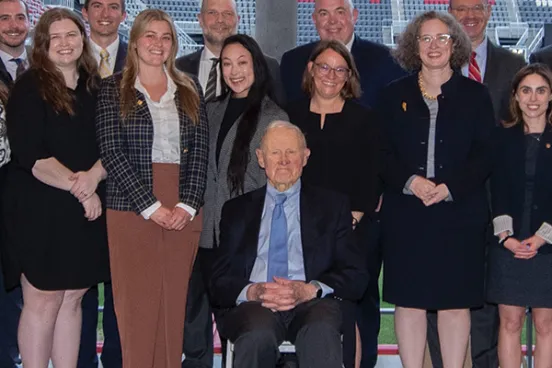
Decades of Careers Launched by the Fiske Fellowship Program for Government Service
Robert B. Fiske Jr., ’55, HLLD ’97, understood that having government service experience early in a professional career can be formative. To make it easier for Michigan Law students to pursue that experience, he endowed the Robert B. Fiske Jr. Fellowship Program for Government Service at Michigan Law in 2001. Law Quadrangle spoke with Fiske Fellows from years past to learn more about the impact the fellowship has had on their careers.

Features Winter 2025
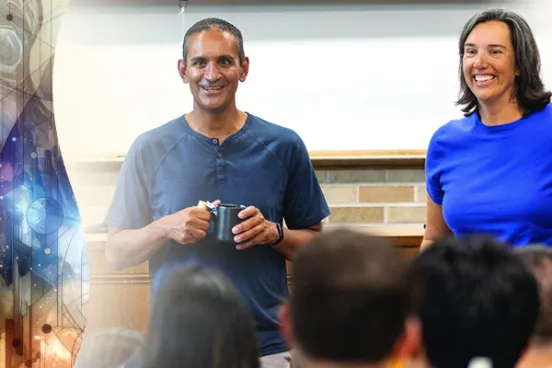
New Michigan Law Clinic to Explore if AI Tools Can Broaden Legal Access
Professors Bridgette Carr, ’02, and Vivek Sankaran, ’01, have dedicated their careers to finding ways to make the justice system accessible to people who have been left behind. Now, they’re looking to artificial intelligence (AI) as an ally in the effort.